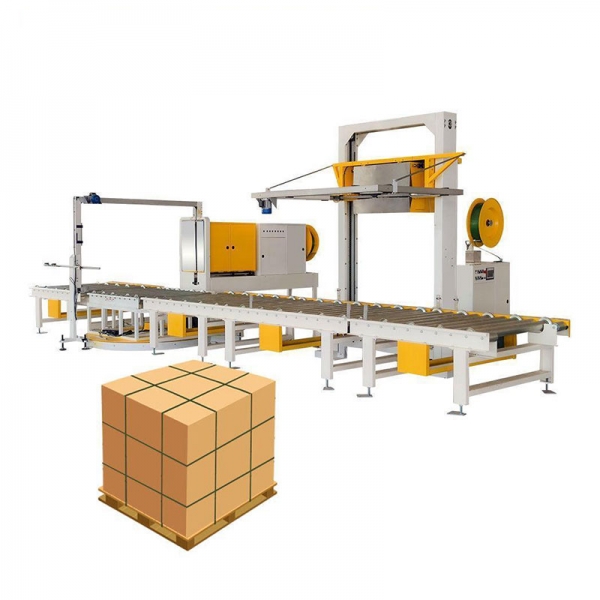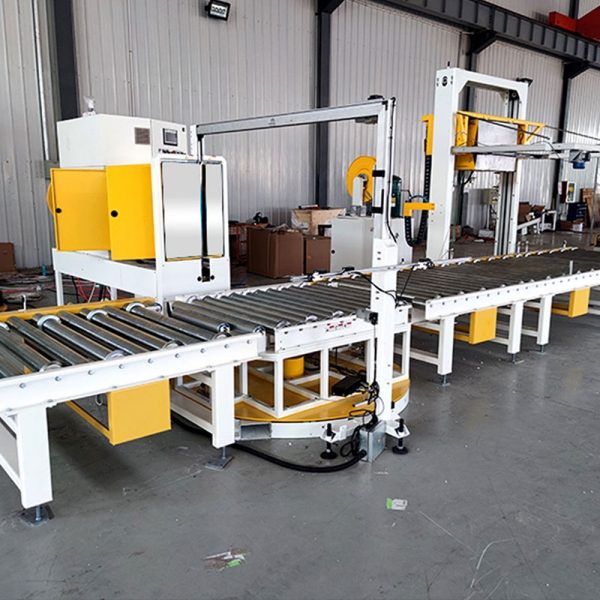
| Step |
Action |
What happens |
|
1. Feed |
Strap is pushed around the pallet through a guiding arch. |
The strap forms a loop around the load. |
|
2. Tension |
Strap is pulled tight. |
The load is compressed and secured. |
|
3. Seal |
Strap ends are welded together by friction (vibration). |
The two ends become one solid loop. |
|
4. Cut |
Strap is cut from the coil. |
The machine is ready for the next strap. |
|
5. Release |
Pallet moves out. |
One strap is complete. |
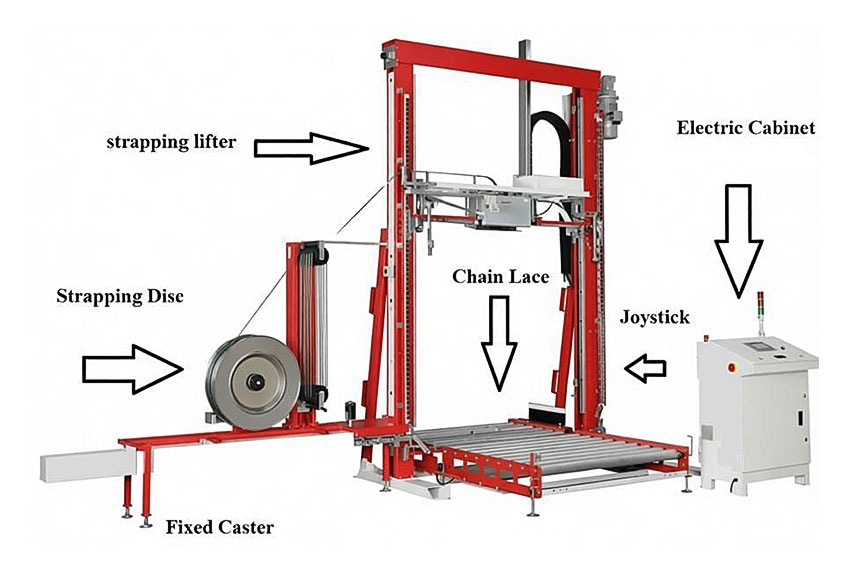
One-button operation – machine handles the entire strapping cycle automatically; Auto strap refeed after coil runs out; Strap end sensor alerts operator when coil is low to prevent mid-cycle jams; Tool-less strap loading – no wrenches required to change coils; Clear error display shows plain-language messages like "Strap jam in left arch corner"
| Parameter |
Range |
Typical Setting |
Application |
|
Minimum tension |
200 – 500 kg |
300 kg |
Lightweight products (empty cartons, foam, fragile goods) |
|
Medium tension |
500 – 1,500 kg |
800 kg |
Standard boxed goods, beverage pallets, general cargo |
|
High tension |
1,500 – 3,000 kg |
2,000 kg |
Heavy loads (bricks, cement bags, paper bales) |
|
Extreme tension |
3,000 – 4,500 kg |
3,500 kg |
Steel strap, metal coils, stone blocks, dense loads |
|
Tension accuracy |
±5% of set value |
– |
Ensures consistent strap application across all pallets |
|
Tension ramp-up time |
0.5 – 2.0 seconds |
1.0 second |
Time to reach full tension from start |
2. How do I choose between PP and PET strap?
| Criterion |
PP (Polypropylene) |
PET (Polyester) |
|
Strength |
Low to medium |
High (similar to steel) |
|
UV/Weather resistance |
Poor (degrades outdoors) |
Excellent |
|
Tension retention |
Low (relaxes over time) |
Medium to high |
|
Cost |
Lower |
Higher |
|
Best for |
Light indoor loads (<600 kg), short-term storage |
Heavy loads, export, outdoor storage, long transit |
3. Can one machine handle different pallet sizes?
Yes, within the arch limits. Fully automatic machines use photoelectric sensors to detect the load height and apply straps at programmed positions (e.g., 200 mm from bottom, 200 mm from top).
For widely varying heights, a robotic (track-type) machine is better because the strapping head can move to any height.
4. How many straps can a pallet strapping machine apply per pallet?
Fixed arch machines: Typically 1, 2, or 3 horizontal straps. Most common is 2 straps (middle and lower). Some models can apply 4 straps by indexing the pallet through the machine multiple times.
Robotic/track machines: Up to 8 or more straps, including vertical cross-straps if a turntable rotates the pallet.
5. Can the machine strap a pallet that is already stretch-wrapped?
Yes, but with caution. Stretch wrap can interfere with strap feeding if it is loose or wrinkled.
Best practice: Strap first, then wrap – provides the tightest unit load.
If wrapping first, ensure the film is tightly applied and trimmed flush with the pallet edges.
6. Can I install the machine without a conveyor?
Semi-automatic: Yes – portable floor models can be moved by forklift. Operator brings the pallet to the machine.
Fully automatic: Requires integration with a conveyor (roller or chain) for infeed and outfeed. The machine cannot "pull" pallets; they must be pushed or driven by the conveyor system.
7. What is the recommended conveyor height?
Typically 450–850 mm adjustable. The machine's strap channel must align with the conveyor surface. Standard pallet strapping machines are designed for Euro pallet or GMA pallet heights.
Tip: Allow 50–100 mm vertical adjustment for fine-tuning alignment.
8. Why does my strap not hold tension after a few hours?
PP strap: Naturally relaxes (creeps) over time – not recommended for long-term storage.
Switch to PET.
PET strap: Should hold >80% of initial tension after 24 hours.
If not: Tension was not high enough to compress the load initially.
Load settled (e.g., corrugated boxes collapsing) – use a top platen machine.
Strap was welded while too loose – check sealing timing.