Printing in China | Book Printing

PALLETIZING SYSTEM

Robotic Palletzier

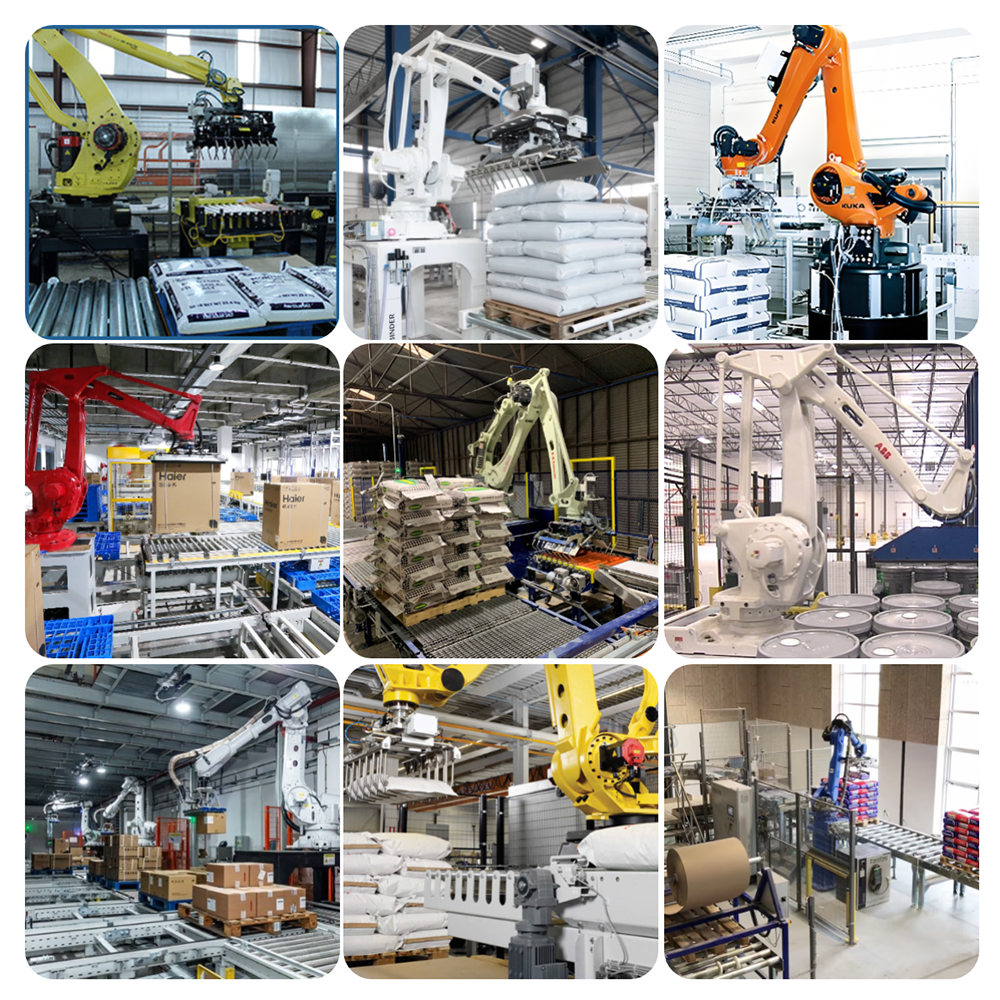
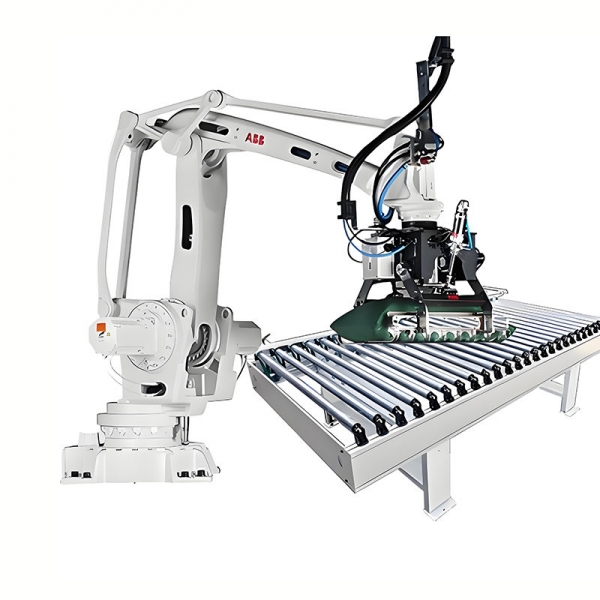
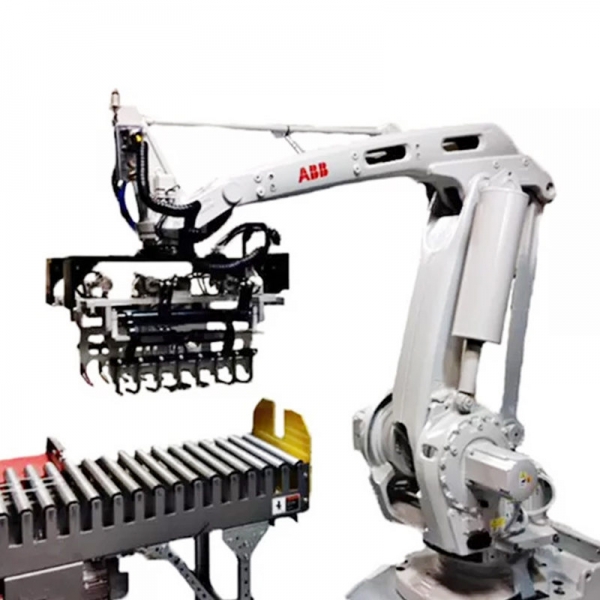
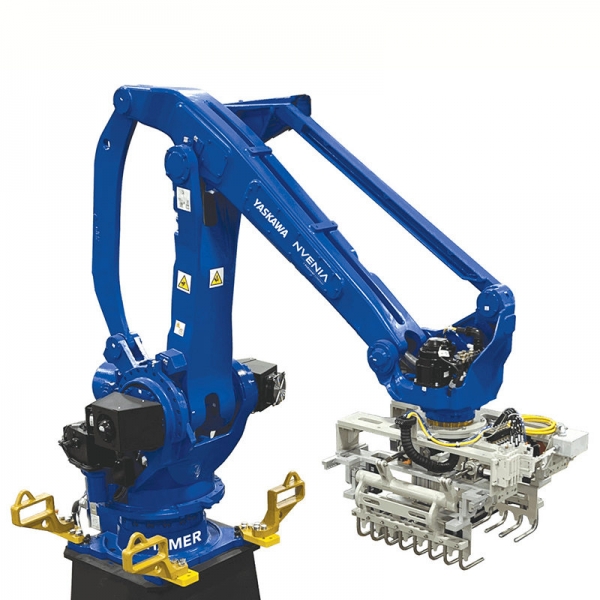
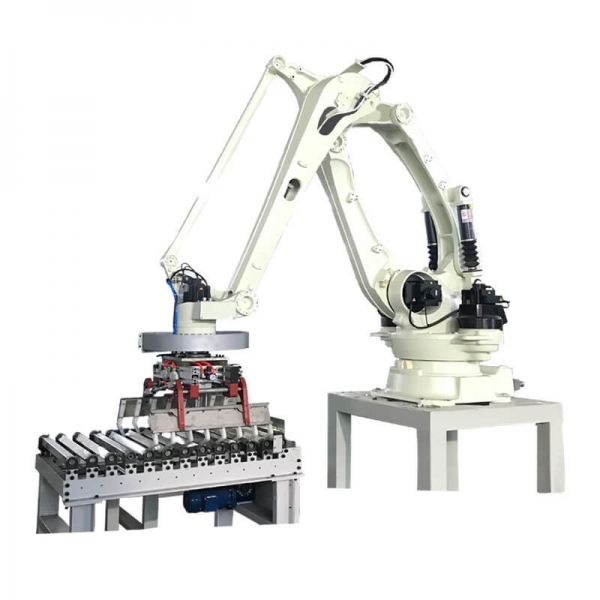
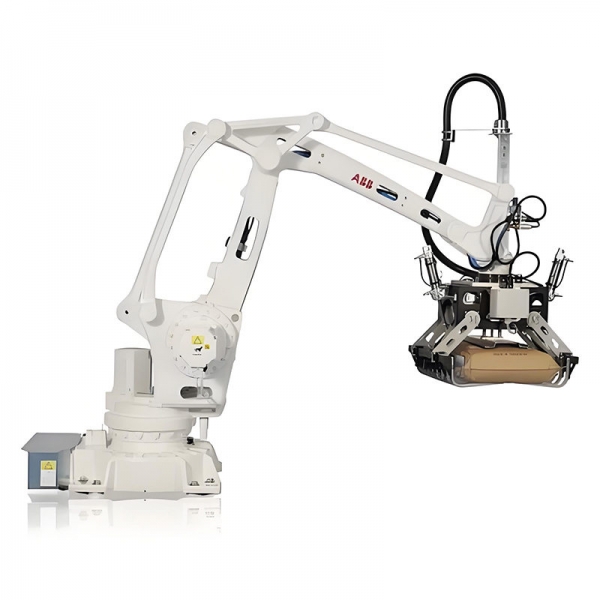
A robotic palletizer is a type of palletizer that uses a robotic arm to pick, orient, and place individual products into a single stack, pallet or load. Representing the next generation of palletizers, robotic models offer advantages such as lower capital cost, versatility, and the ability to perform multiple tasks. However, their limitations in speed, product dimension tolerance, and robustness prevent them from entirely replacing traditional palletizers in all applications. Like any other type of palletizers, robotic palletizers take advantage of the concept of unit load. Unit load refers to the assembly of materials combined for efficient handling. It is faster and more economical to move a large, single unit instead of several small individual items. Finished goods are not designed and built to be handled and shipped separately. These are usually placed in boxes, cases, trays, and crates that are then combined into a single unit supported by pallets or roll cages. The former ones a
Whatsapp:+86 15371056062
E-mail:sales@dostar-packing.com

Detail


Working Process:

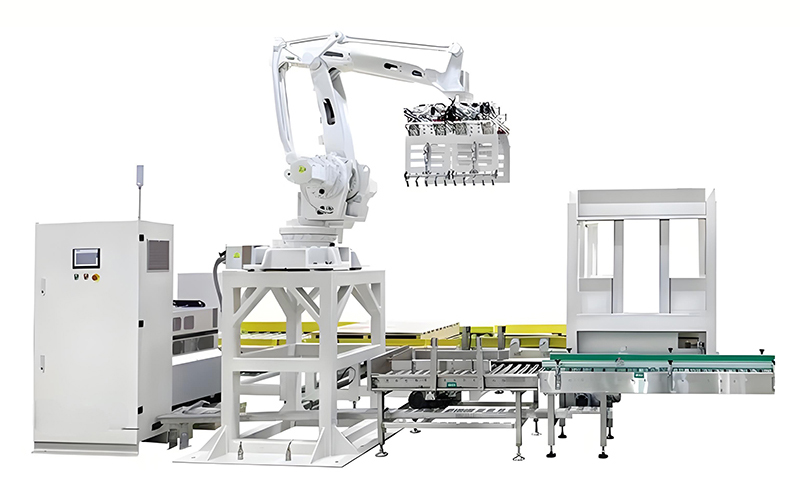
Like a conventional system, a robotic palletizer uses a conveyor belt to move items. Unlike a conventional system, however, it uses robot technology to arrange and stack items instead of requiring employees to move items manually. As products move along the conveyor belt, the system will maneuver a pallet into place. A robot will take the products, twist them into the correct position, and place them on the pallet. The robotic palletizer places each of these items, layer by layer, onto the pallet until it’s full. An employee or another robot moves the pallet from the packing area, and a new one takes its place. The process repeats from there.


Specifications:

Robotic palletizer systems are defined by a comprehensive set of technical specifications that determine their performance capabilities, operational limits, and suitability for specific applications. Below are the key working specifications across different system types and manufacturers.


Pallet height

≤2000mm(with pallet)

Bags per layer

3~8(depending on bag size)

Palletizing form

2+3/3+2,3+3,2+4/4+2,2+2+3/3+2+2, 3+3+2/2+3+3(depending on bag size)

Bag weight

10~50 kg/bag

Pallet material

Wooden pallet, engineering plastic pallet, iron pallet, corrugated paper pallet

Fork form

Two-sided or four-sided fork

Pallet size

Length 800~1600mm, width 800~1200mm, height 80mm~200mm

Working Recycle

600 ~ 1200 bags / hour (different brands with different capacity)


Application


Food & Beverage: Largest market segment; high-speed packaging lines, Case-packed beverages, bagged coffee, canned goods, bakery items, pet food, bottled products.
Pharmaceuticals: Precision handling; compliance-focused packaging, Cartoned drugs, medical devices, clinical trial supplies
Chemicals: Heavy bag handling; hazardous material containment, 25-50 kg bags of resins, fertilizers, plastic pellets
Building Materials: Cement bags, dry mortar, plasterboard, bricks, insulation materials;


FAQ:

1. What is a robotic palletizer and how does it work?

A robotic palletizer is an automated system that uses a robotic arm to pick products from a conveyor or infeed station and stack them onto pallets according to predefined patterns. The system typically consists of:

  • A robotic arm (industrial or collaborative)
  • An end-of-arm tool (EOAT) such as a vacuum gripper or mechanical clamp
  • Conveyors and sensors for product handling
  • Software for pattern optimization and control

The robot follows programmed stacking patterns, placing each layer with high repeatability until the pallet reaches the specified height. Compared to conventional palletizers, robotic systems offer greater flexibility to handle multiple SKUs and change patterns through software rather than mechanical adjustments


2. What types of products can robotic palletizers handle?

Robotic palletizers can handle a wide range of products, including:

Product Type

Examples

Boxes and cartons

Corrugated boxes, shipping cases

Bags and sacks

Cement bags, animal feed, agricultural products

Pails and drums

Plastic pails, metal drums, chemical containers

Trays and shrink-wrapped packs

Beverage trays, consumer goods multipacks

Most modern systems can manage multiple SKUs with fast changeovers. Advanced setups use barcode scanners or vision systems to dynamically identify and handle different products on the same line.


3. How do I choose the right palletizer for my operation?

Selecting the optimal system requires evaluating several key criteria:
Product type and weight – Gripper selection (vacuum vs. mechanical) depends on box integrity, bag texture, or drum handling needs. Collaborative robots typically handle up to 30–35 kg, while industrial systems can manage much heavier loads.
Throughput requirements – Measure your required cycles per minute. High-speed, low-mix lines favor industrial robots; high-mix, lower-speed lines favor cobots.
Floor space – Cobot palletizers often have footprints as small as half a pallet and can be moved between lines. Industrial systems require more space due to safety fencing.


SKU changeover frequency – Software-based changeovers take under a minute. If you run dozens of product sizes daily, prioritize systems with intuitive recipe management.
In-house automation experience – Teams new to robotics benefit from user-friendly software platforms and pre-engineered "plug-and-play" solutions rather than custom-integrated systems.


4. What safety measures are required?

Safety requirements depend on robot type and application:

  • Traditional industrial palletizers typically require perimeter fencing, light curtains, area scanners, or complete enclosures. Operators cannot work inside the safeguarded area during operation.
  • Collaborative robot (cobot) palletizers feature built-in force and speed limiting, contact sensors, and rounded edges. Some configurations can operate without bulky guarding, though a proper risk assessment is always required. Cobots often meet ISO/TS 15066 standards for collaborative operation.
  • Key safety standards – ANSI R15.06 (North America) and ISO 10218 govern robotic safety. Ask your integrator for a copy of the Risk Assessment Review to understand why safety elements are placed where they are.

Even with cobots, safeguarding may still be required depending on speed, pallet height, and specific application risks. Always conduct a site-specific risk assessment.


5. What is the typical ROI for a robotic palletizer?

Standard payback periods range from 12 to 18 months, though some manufacturers achieve ROI in as little as 13 months.


ROI comes from multiple sources:

Labor cost savings – One robot can replace multiple workers on repetitive palletizing shifts
Reduced injury costs – Eliminating ergonomic risks (lifting, bending, twisting) lowers workers' compensation claims
Consistent throughput – Robots don't tire, take breaks, or turnover
Reduced product damage – Consistent placement means fewer crushed boxes or unstable pallets
High-efficiency collaborative palletizers can generate approximately 5× return on investment over 7 years. Many automation vendors offer ROI calculators to estimate payback for your specific production data.


If you have any questions or comments, you can leave us a message and we will reply to you as soon as possible
Can't see clearly, change one